Friday, January 19, 2018

Wednesday, January 17, 2018
Dance and Meditation

Ballet West's Chelsea Keefer
When Alonzo King LINES Ballet dancer James Gowan started meditating in early 2017, he was seeking a more mindful approach to his dancing. "I was trying to be more aware of what I was doing inside the studio, so that it could help me be more positive with myself and my work," he says. He found it so helpful that he now does breathing exercises and visualizations for 45 minutes a few mornings a week. On rehearsal breaks, he'll take five minutes to do a body scan or calm his mind.
But he finds the benefits go far beyond the studio. "Meditation has provided me a new perspective," he says. "It really does bring a heightened awareness of what's going on around you."
Science shows that meditation's myriad benefits range from physical health to emotional well-being. Meditation's popularity has risen to trend level, and savvy entrepreneurs have caught on, capitalizing on the wave of interest with subscription-based meditation apps, exotic retreats and $29-a-pop classes. But what are the benefits for dancers specifically?
It has healing effects.
The technique works by calming the brain's limbic system, explains physical therapist Brent Anderson, PhD. "The limbic system is where we get fight, flight, freeze," he says. Even brief meditation triggers the relaxation response, which boosts well-being, cognition, immunity and more. A 2013 study by the Benson-Henry Institute for Mind/Body Medicine at Massachusetts General Hospital and Beth Israel Deaconess Medical Center showed that the relaxation response actually changes how genes involved in immunity, metabolism and insulin are expressed.
 Chelsea Keefer
Ballet West demi-soloist Chelsea Keefer credits her seven-year meditation practice with helping her avoid injury. Since she has better awareness of her body, she's able to take care of anything that hurts right away. "It doesn't progress to the point where I have to see the physical therapist all the time," she says.
"A lot of the meditations I listen to have this ball of light that travels through your body," adds Gowan. "I'll visualize it in places where I'm feeling a little hurt or achy, and let it break up the tension I'm holding."
It can help you learn rep.
In your mind, you can do mental rehearsals, practicing things in slow motion and fast motion, says Anderson. "There are studies that show this can significantly improve performance."
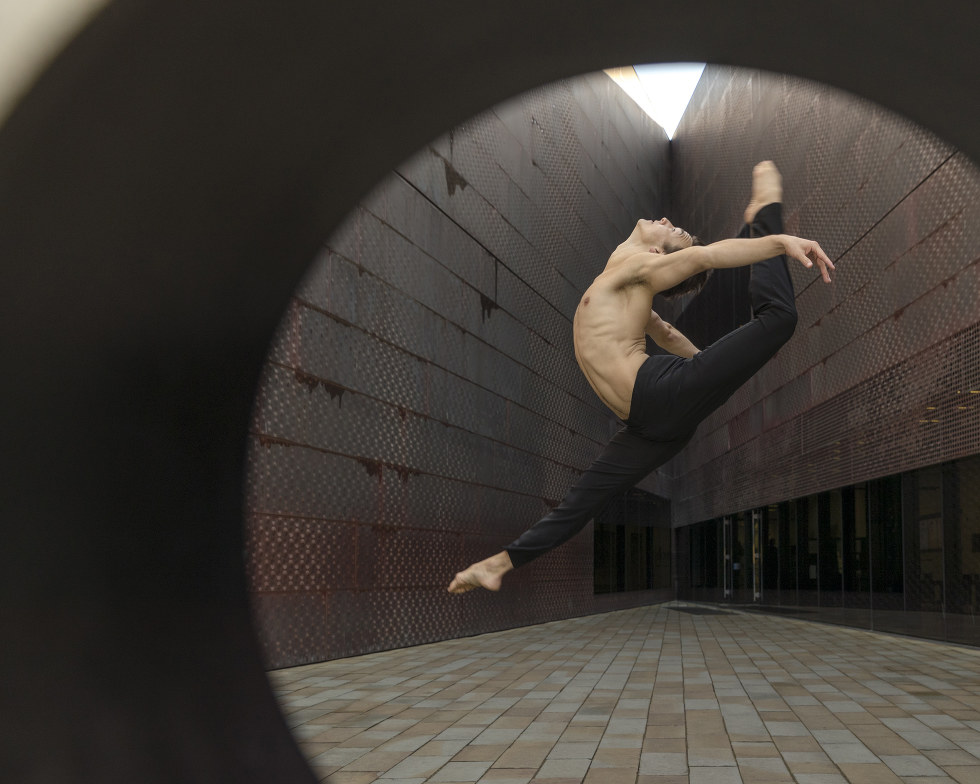 James Gowan. Photo taken by Michael O'Neal at the De Young Museum
It can calm pre-performance jitters.
Being in the present moment has helped calm Keefer's stage fright. She uses compassion meditation backstage. "Watch the people who are performing before you, and send them love and compassion for what they're doing out there, because you're about to do the same thing," she says.
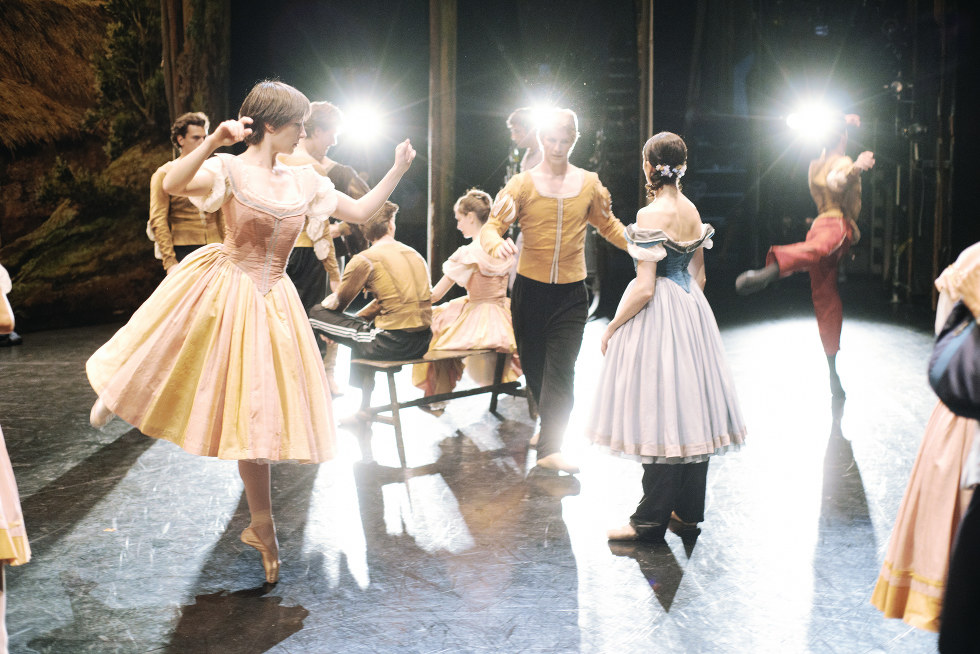 Jim Lafferty for Pointe
It can change your relationship to dance.
Keefer feels meditation has transformed her dancing. "It gives me a balance when I go into rehearsals or classes. I'm not constantly critiquing myself," she says. "When you have meditation as your stability, you're able to go into roles more objectively. It allows you to know your worth."
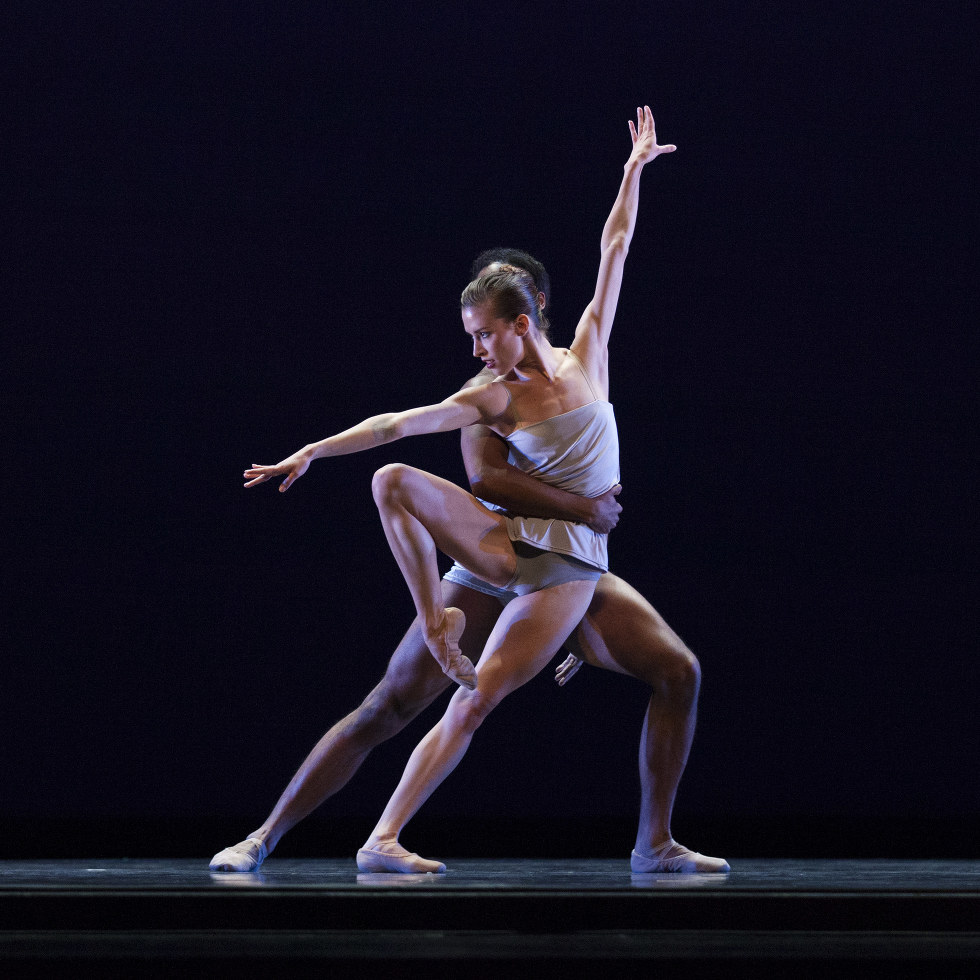 Chelsea Keefer. Photo by Beau Pearson, courtesy Ballet West.
Show less

Arthur Mitchell Dancer
Arthur Mitchell in class, 1960s. Photo by Milton Oleaga. Arthur Mitchell Collection, Rare Book & Manuscript Collection, Columbia University.
Throughout his remarkable career, the fiercely determined, intelligent and energetic Arthur Mitchell has become accustomed to being called a trailblazer. "Being a typical Aries, I like being the first," he says, laughing. "That's what I've been doing all my life."
This is true, especially when it comes to the discussion at the forefront of today's national dialogue about dance: diversity in ballet.
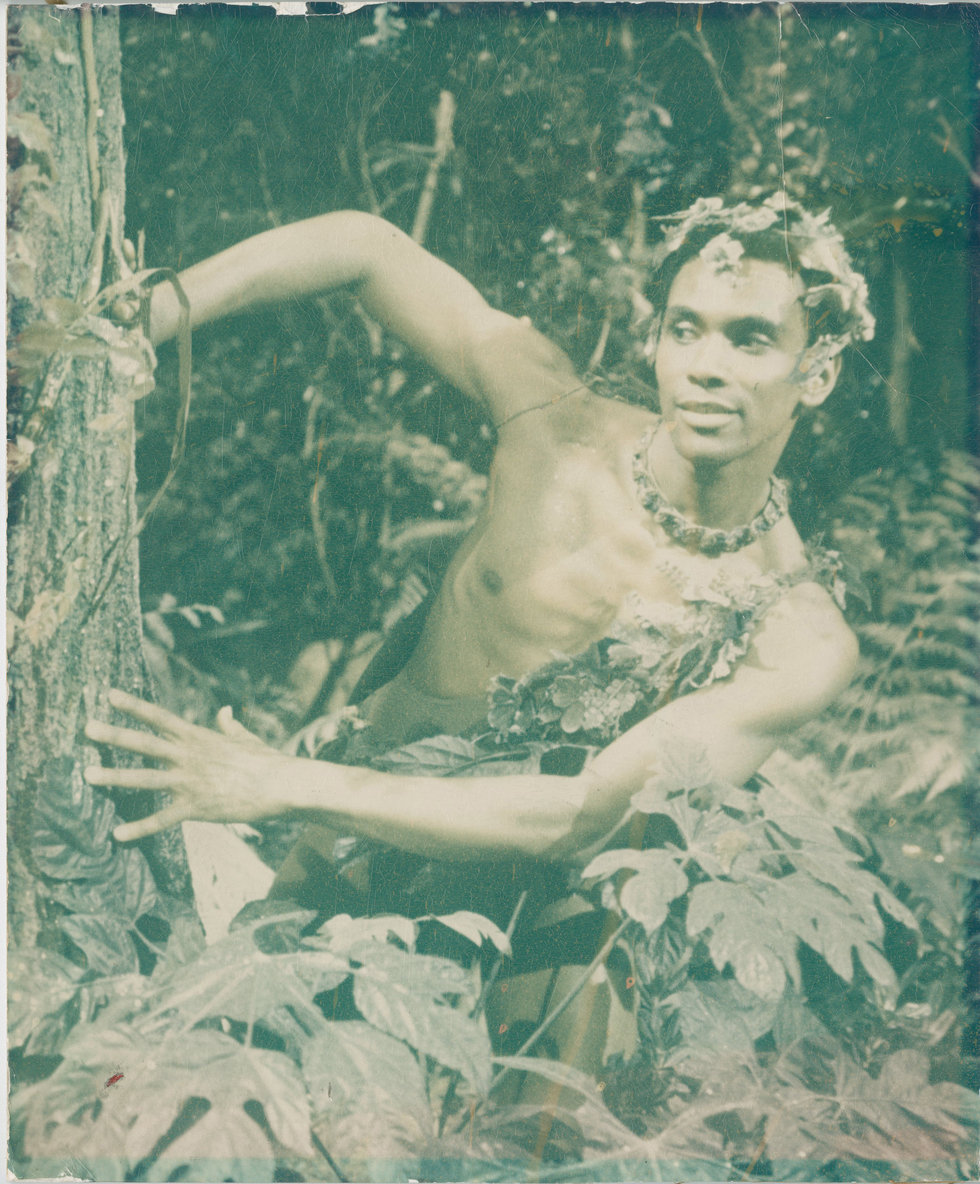 Arthur Mitchell as Puck in A Midsummer Night's Dream, 1962. Arthur Mitchell Collection, Rare Book & Manuscript Collection, Columbia University.
This weekend, "Arthur Mitchell: Harlem's Ballet Trailblazer," an exhibition celebrating the accomplishments of New York City Ballet's first African American principal dancer and co-founder of Dance Theatre of Harlem, opens at Columbia University's Miriam and Ira D. Wallach Art Gallery.
Back in 1975, Mitchell told Dance Magazine, "We have to prove that a black ballet school and a black ballet company are the equal of the best of their kind anywhere in the world." Both his own performing career and the critical response to DTH in the years immediately following its official debut would have been enough for him to say "mission accomplished."
But, clearly, Mitchell says, there is still work to be done. That's where young, up-and-coming trailblazers come in.
Sharing advice he received from George Balanchine and Lincoln Kirstein, Mitchell says, "They said, 'You've got to take the bull by the horns and do what you have to do. You must believe in what you're doing and, against all odds, against anyone else's feeling and vision, you must stick to it. And, eventually, know that the world will catch up with what you're doing and appreciate it."
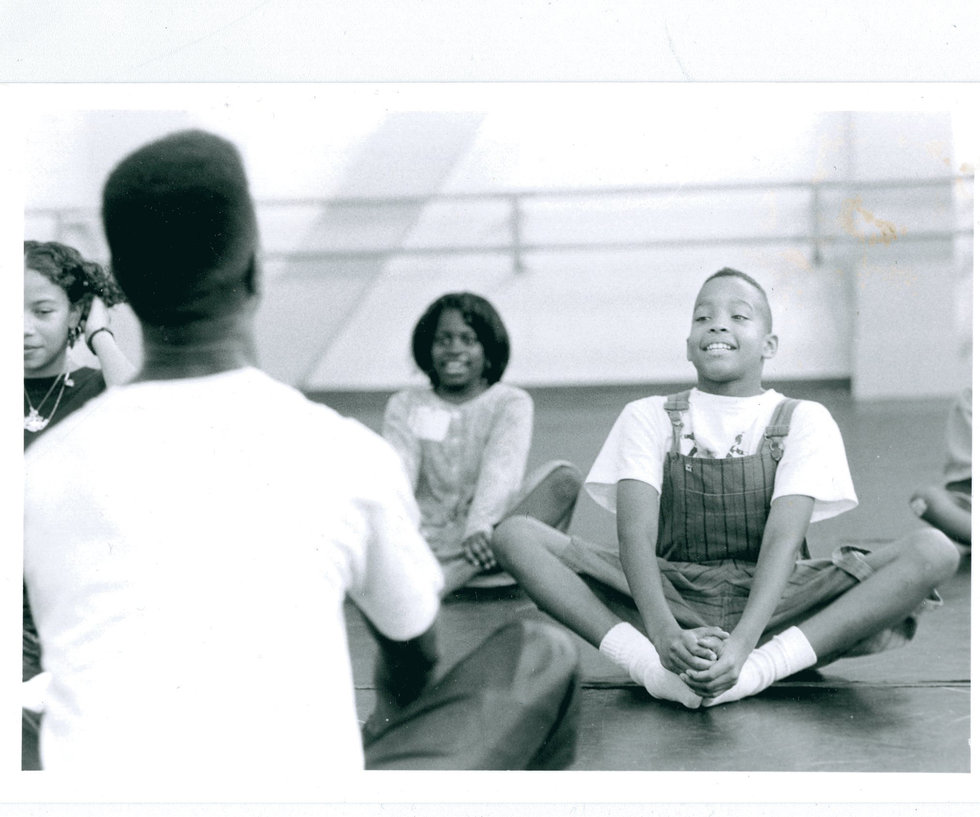 Studio outreach class at the Dance Theatre of Harlem, 1970s. Arthur Mitchell Collection, Rare Book & Manuscript Collection, Columbia University.
Has the world caught up with his own dreams and visions?
"No," says Mitchell. "How many black girls are there now dancing in ballet? Name all the companies in America. How many have a leading African-American ballerina? There's only one in a major company, that's Misty Copeland in American Ballet Theatre. There's still work to be done. There's got to be more training. There's got to be teachers who are working in the black communities that are taking into account what these dancers have to face."
While he is no longer director of Dance Theatre of Harlem, Mitchell, now 83, continues blazing trails under the auspices of the Arthur Mitchell Project, which is funded by the Ford Foundation.
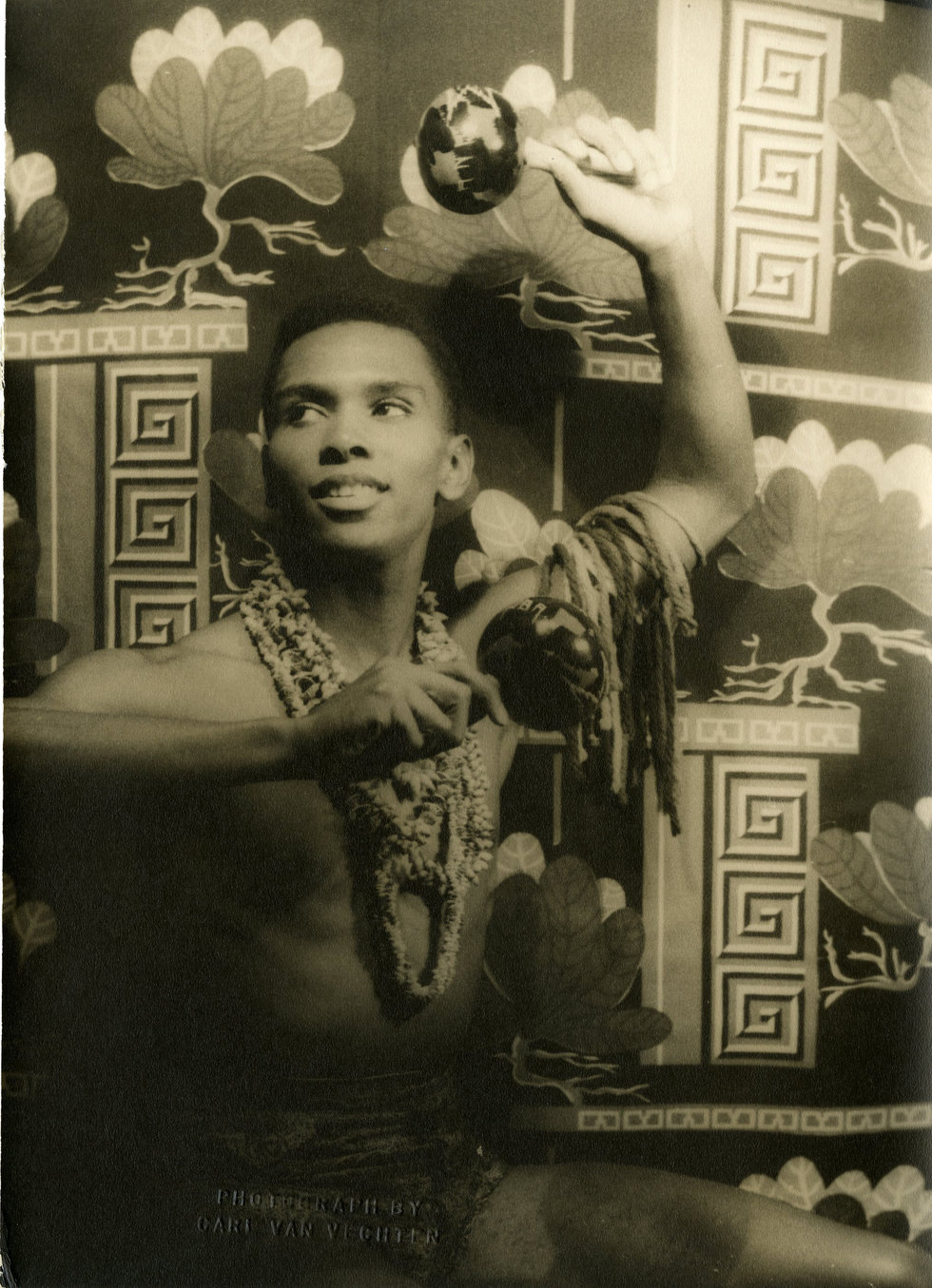 Arthur Mitchell shortly after joining the New York City Ballet in 1955. Photo by Carl Van Vechten. Arthur Mitchell Collection, Rare Book & Manuscript Collection, Columbia University.
The "Harlem's Ballet Trailblazer" exhibit features an amazing array of treasures from a life well-lived, including the telegram from Lincoln Kirstein to Mitchell inviting him to join the New York City Ballet and an eight-foot-long DTH puzzle created by Frank Bara in 1991 that chronicles the first two decades of the company's history with illustrative detail of its artists, heroes and friends.
On view also is dancer Charmaine Hunter's costume and headpiece designed by Geoffrey Holder for Firebird (1982), one of DTH's signature works. There are posters from DTH's innumerable tours, photos, performance footage of Mitchell in Agon, Four Temperaments, Midsummer Nights Dream and more. The exhibit also has an online component that will include a detailed timeline and numerous essays, all open to the public.
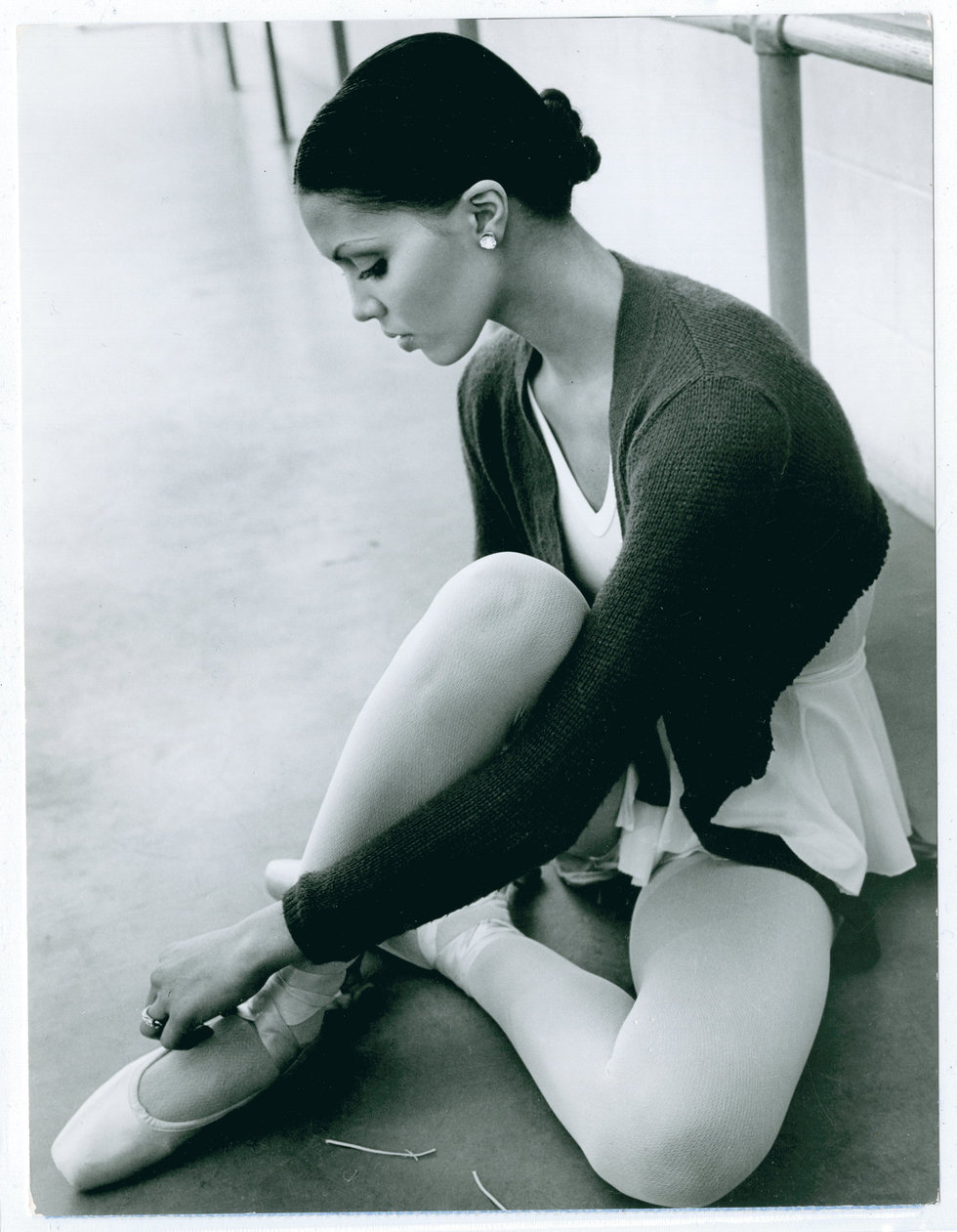 Dance Theatre of Harlem ballerina Lydia Abarca, 1970s. Arthur Mitchell Collection, Rare Book & Manuscript Collection, Columbia University.
"This exhibition pays homage both to Mitchell's creative magic and to his visionary achievements, revealing to those who never saw him dance his charismatic stage presence and the full scope of his career as an artist," says curator Lynn Garafola. "At the same time, it places the Dance Theatre of Harlem, which he co-founded and directed for more than 40 years, at the crossroads of political, artistic and racial change in the United States and beyond."
The show will run through March 11.
Show less

Aesha Ash dancer
Jan. 11, 2017 11:01AM EST
Why Aesha Ash is Wandering Around Inner City Rochester in a Tutu
Ash in Rochester, NY. PC Thaler Photography by Arleen and Daryl Thaler for the Swan Dreams Project
Growing up in inner city Rochester, NY, Aesha Ash was just one of the neighborhood kids. She'd imagine people driving by, judging her by her black skin.
"They'd never know that I was dreaming of becoming a professional ballet dancer. No one would think, Some day she's going to make it into New York City Ballet," says Ash.
After an inspiring career at NYCB, Béjart's Ballet Lausanne and LINES, the January 2006 Dance Magazinecover star—one of our 25 to Watch that year—is no longer performing. But she's determined to use her dance background to change the stereotypes and misconceptions that people—including black people—have about women of color. "I want to show it's okay to embrace our softer side, and let the world know we're multidimensional," says Ash.
 Aesha Ash in Richmond, CA. PC Renee Scott via swandreamsproject.org
In 2011, she launched the Swan Dreams Project to inspire kids in the community she grew up in. The original idea was to post images of herself in a tutu all over Rochester. "I remember growing up and in the bodega you'd see images of girls in bikinis on motorbikes," says Ash. "I wanted to replace those with photos that show women of color in a different light."
She knew the power imagery can have: She still remembers what it felt like as a student at the School of American Ballet to see a photo of black ballet dancer Andrea Long. "That image was everything on days when I was feeling disenchanted. I'd see that picture of her, and know that the struggles I was going through, she went through them, too."
Ash soon realized she didn't have the budget to fund her original plan ("I never realized how expensive a bus stop advertisement is!"). But she's made the images available through an online store, and often simply gives away prints at her own expense to schools and students in need of some inspiration.
Any proceeds she makes from the sales go directly to other organizations that are working to expand ballet in diverse communities. One large donation even led to a pointe shoe fund at dancer Robyn Gardenhire's City Ballet of Los Angeles school—and it helped one dancer who had quit ballet because of the expense come back to class.
Now a mother of two in San Jose, CA, Ash will also start teaching a free after-school ballet class at her daughter's public school next month. "I recently taught at Girls Inc. in Oakland, and one of the little black girls said, 'Are you the ballet teacher?' She just stood there, staring at me with her mouth open, like a unicorn had just walked into the room," Ash says. "You never know the impact you can have just by being a presence."
If you're interested in supporting the project, check out the online shop, or donate directly at swandreamsproject.org.
"They'd never know that I was dreaming of becoming a professional ballet dancer. No one would think, Some day she's going to make it into New York City Ballet," says Ash.
After an inspiring career at NYCB, Béjart's Ballet Lausanne and LINES, the January 2006 Dance Magazinecover star—one of our 25 to Watch that year—is no longer performing. But she's determined to use her dance background to change the stereotypes and misconceptions that people—including black people—have about women of color. "I want to show it's okay to embrace our softer side, and let the world know we're multidimensional," says Ash.
In 2011, she launched the Swan Dreams Project to inspire kids in the community she grew up in. The original idea was to post images of herself in a tutu all over Rochester. "I remember growing up and in the bodega you'd see images of girls in bikinis on motorbikes," says Ash. "I wanted to replace those with photos that show women of color in a different light."
She knew the power imagery can have: She still remembers what it felt like as a student at the School of American Ballet to see a photo of black ballet dancer Andrea Long. "That image was everything on days when I was feeling disenchanted. I'd see that picture of her, and know that the struggles I was going through, she went through them, too."
Any proceeds she makes from the sales go directly to other organizations that are working to expand ballet in diverse communities. One large donation even led to a pointe shoe fund at dancer Robyn Gardenhire's City Ballet of Los Angeles school—and it helped one dancer who had quit ballet because of the expense come back to class.
Now a mother of two in San Jose, CA, Ash will also start teaching a free after-school ballet class at her daughter's public school next month. "I recently taught at Girls Inc. in Oakland, and one of the little black girls said, 'Are you the ballet teacher?' She just stood there, staring at me with her mouth open, like a unicorn had just walked into the room," Ash says. "You never know the impact you can have just by being a presence."
If you're interested in supporting the project, check out the online shop, or donate directly at swandreamsproject.org.
Tuesday, January 9, 2018
Subscribe to:
Posts (Atom)